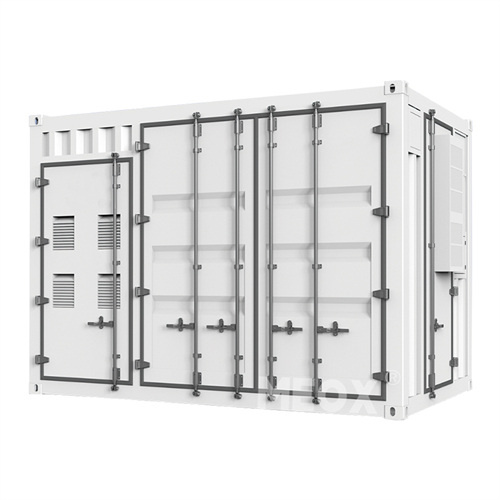
A photovoltaic system for residential, commercial, or industrial energy supply consists of the solar array and a number of components often summarized as the (BOS). This term is synonymous with "" q.v. BOS-components include power-conditioning equipment and structures for mounting, typically one or more DC to power converters, also known as
[pdf] Solar manufacturing encompasses the production of products and materials across the solar value chain. This page provides background information on several manufacturing processes to help you better understand how solar works. .
Silicon PV Most commercially available PV modules rely on crystalline silicon as the absorber material. These modules have several manufacturing steps that typically occur separately from each other. Polysilicon Production –. .
The support structures that are built to support PV modules on a roof or in a field are commonly referred to as racking systems. The manufacture of PV racking systems varies significantly depending on where the installation will. .
Power electronics for PV modules, including power optimizers and inverters, are assembled on electronic circuit boards. This hardware converts direct current (DC) electricity,.
[pdf] This is a list of notable photovoltaics (PV) companies. Grid-connected solar photovoltaics (PV) is the fastest growing energy technology in the world, growing from a cumulative installed capacity of 7.7 GW in 2007, to 320 GW in 2016. In 2016, 93% of the global PV cell manufacturing capacity utilizes crystalline. .
Top 10 by yearSummaryAccording to EnergyTrend, the 2011 global top ten , solar cell and solar module manufacturers by capacity were found in countries. .
Other notable companies include: • , Hong Kong, China• , Tucson, Arizona, US• , California, US• , Canberra, Australia .
• 1. ^ . .
China now manufactures more than half of the world's solar photovoltaics. Its production has been rapidly escalating. In 2001 it had less than 1% of the world market. In contrast, in 2001 Japan and the United States combined had over 70% of world production. By. .
• • • •
[pdf]