AMARON BATTERY SRI LANKA AUTO PARTS STORE

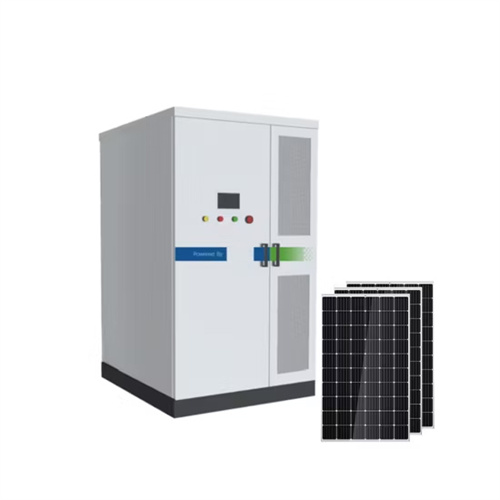
Battery to store electricity South Korea
Lithium-ion battery import volume South Korea 2012-2023. Volume of lithium-ion batteries imported to South Korea from 2012 to 2023 (in 1,000 metric tons). Lithium-ion battery import volume South Korea 2012-2023. Volume of lithium-ion batteries imported to South Korea from 2012 to 2023 (in 1,000 metric tons). This research report categorizes the market for South Korea's battery energy storage based on various segments and regions forecasts revenue growth and analyzes trends in each submarket. The report analyses the key growth drivers, opportunities, and challenges influencing the South Korea battery energy storage market.. 1. Gyeongsan Substation – Battery Energy Storage System. The Gyeongsan Substation – Battery Energy Storage System is a 48,000kW lithium-ion battery energy storage project located in Jillyang-eup, North Gyeongsang, South Korea. The rated storage capacity of the project is 12,000kWh.. South Korea holds the largest share of battery energy storage systems. A battery energy storage system (BESS) is a type of energy storage system that uses batteries to store. . South Korean utility Korea Electric Power Corp. (KEPCO) has officially finished construction works on a massive battery energy storage project in the city of Miryang, in. [pdf]FAQS about Battery to store electricity South Korea
Are rechargeable batteries a problem in South Korea?
(Yonhap) As electric vehicle sales are growing in South Korea, one big issue coming in the foreseeable future is what to do with rechargeable batteries that outlive their useful life for a vehicle.
Which battery manufacturers are based in South Korea?
Major battery manufacturers such as LG Chem and Samsung SDI Co., Ltd. are based in South Korea. They have been investing heavily in developing advanced battery technologies, which has contributed to the growth of the BESS market in the country.
Can EV batteries be recycled?
"As retired EV batteries can be recycled depending on their remaining life spans and conditions, the company has been developing technologies to effectively use them and looking at ways for their appropriate applications," LG Energy Solution said in a release.
Sri Lanka vic energy ab
Victoria Dam (Sinhala: වික්ටෝරියා වේල්ල Viktoriya Vella) is an arch dam located 130 mi (209 km) upstream of the Mahaweli River's mouth and 4 mi (6 km) from Teldeniya. It is named in honour of Queen Victoria of the United Kingdom. Its main purposes are irrigation and hydroelectric power production. It is. . The Victoria Dam was constructed under the Accelerated (AMDP). The project had been in planning for 30 years but was accelerated in 1977 to address economic difficulties within the. . • Power Station of Victoria Dam • Victoria Dam • Victoria Dam from the top • Victoria Dam Sluice Gates . The dam measures 122 m (400 ft) tall, with a crest length of 520 m (1,706 ft), crest width of 6 m (20 ft), and a base width of 25 m (82 ft). The dam creates the Victoria Reservoir, which has a surface area of 22.7 km (8.8 sq mi), gross storage capacity of 722,000,000. . • • • • . 's electricity demand is currently met by nine , fifteen large power stations, and fifteen , with a smaller share from facilities and other renewables such as . Most hydroelectric and thermal/–based power stations in the country are owned and/or operated by the government via the state-run [pdf]FAQS about Sri Lanka vic energy ab
How many power stations are there in Sri Lanka?
Sri Lanka 's electricity demand is currently met by nine thermal power stations, fifteen large hydroelectric power stations, and fifteen wind farms, with a smaller share from small hydro facilities and other renewables such as solar.
When did hydroelectricity become popular in Sri Lanka?
Hydroelectricity was popularized as early as the 1920s by Devapura Jayasena Wimalasurendra, who is considered as the "father of hydropower" in Sri Lanka. It lost its majority share on the power grid when further thermal power stations were introduced in 2010.
Does Sri Lanka generate hydroelectric power?
Sri Lanka is a country that generates hydroelectric power, providing almost all the electricity needs until the early 1990s. A large share of the hydro potential has already been developed, delivering valuable low-cost electricity to many parts of the country.
When did Sri Lanka start using wind power?
Sri Lanka's wind power sector saw activity as early as 1988, when studies were conducted to build a pilot wind project in the Southern Province. More than a decade later, the state-owned 3 MW Hambantota Wind Farm was commissioned.
Where is the nearest railway station in Sri Lanka?
The nearest railway station is Kandy. Main contractors for the Dam and Tunnel were the Joint British Venture, Balfour Beatty Nuttal and the Power Station was contracted to Costan International. Victoria dam is the highest dam in Sri Lanka and has the largest Power Station in the country.
