ECONOM237A DEL ALMACENAMIENTO DE ENERG237A MONTENEGRO
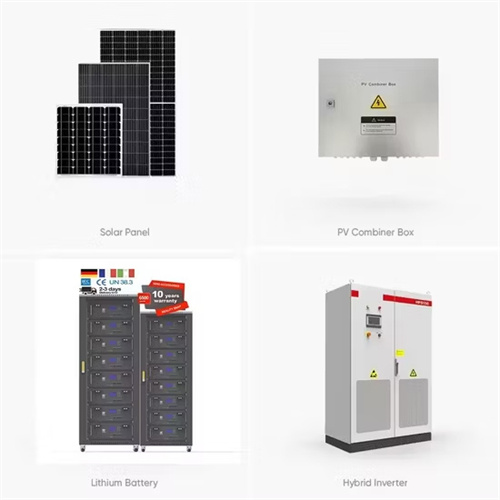
Montenegro pico solar products
Can supply multiple LEDs Can also supply radio/small TV . Azuri Technologies, with headquarters in Cambridge, UK, is currently the provider of SHS in SSA with the widest reach. It has operations in 11 different. . The following section will provide a number of decisive elements that seem to have coincided to enable the development of the market for pico-sca-le solar PV systems in SSA, as. . Azuri operates through local partners with already established distribution networks, which enables market penetration even in the most remote areas. Local partners provide the necessary upfront capital for purchasing and installing. [pdf]
Montenegro mercadolibre paneles solares
Los paneles solares son dispositivos fotovoltaicos que convierten la energía solar en electricidad de forma limpia y sostenible. Están compuestos por células fotovoltaicas de silicio cristalino, un material altamente eficiente en la conversión de la luz solar en energía eléctrica. Su color característico es azul oscuro, lo. . Los paneles solares varían en potencia desde 100W hasta 400W por panel, lo que permite adaptar la instalación a las necesidades energéticas específicas. Sus dimensiones también. . La eficiencia de los paneles solares se encuentra entre el 15% y el 22%, lo que determina la cantidad de energía solar que pueden convertir en electricidad. La tensión de trabajo puede. . Con una vida útil de más de 25 años, los paneles solares son una inversión a largo plazo para la generación de electricidad a partir de la luz solar. Sus. . Los paneles solares pueden operar en un Rango de temperatura amplio, desde -40°C hasta 85°C, lo que los hace aptos para diferentes climas y. [pdf]
Almacenamiento de carga eléctrica Faroe Islands
Energy in the Faroe Islands is produced primarily from imported fossil fuels, with further contributions from hydro and wind power. Oil products are the main energy source, mainly consumed by fishing vessels and sea transport. Electricity is produced by , and , mainly by , which is owned by all the municipalities of the Faroe Islands. The are not connected by power lines with continental Europe, and thus the archipelago can. [pdf]FAQS about Almacenamiento de carga eléctrica Faroe Islands
How is energy produced in the Faroe Islands?
In the Faroe Islands, energy is produced primarily from hydro and wind power, with oil products being the main energy source. Mostly consumed by fishing vessels and sea transport.
Can the Faroe Islands import or export electricity?
The Faroe Islands cannot import or export electricity since they are not connected by power lines with continental Europe. Per capita annual consumption of primary energy in the Faroe Islands was 67 MWh in 2011, almost 60% above the comparable consumption in continental Denmark.
Are the Faroe Islands a sustainable country?
Did you know that the Faroe Islands is one of the world’s leading nations in producing sustainable electricity with over 50% of the nation’s electricity deriving from renewable energy sources? There is no shortage of renewable power in the Faroe Islands, due to the ocean currents and tides of the Northeast Atlantic and an abundance of strong wind.
How much electricity is renewable in the Faroe Islands?
In the Faroe Islands, more than 80% of the power for the main grid was renewable on 50 days in 2022. The municipality-owned company SEV is the main electricity supplier, providing approximately 90% of the total production, with private producers contributing the remaining percentage.
Is biomass a source of electricity in the Faroe Islands?
Traditional biomass – the burning of charcoal, crop waste, and other organic matter – is not included. This can be an important source in lower-income settings. Faroe Islands: How much of the country’s electricity comes from nuclear power? Nuclear power – alongside renewables – is a low-carbon source of electricity.
Does the Faroe Islands have a solar park?
The Faroe Islands have a solar park with a 250 kW capacity in Sumba. It is expected to produce 160 MWh/year (i.e. a capacity factor of 7.3% and equivalent to 35 tons of oil), mainly in the summer when rain and wind are low.