MOROCCO GOTION HIGH TECH SIGN MAD 12.8 BLN AGREEMENT TO

How high above the ground does a wind turbine need to be to have wind
Some would argue the height of a wind turbine is measured from the ground to the tip, but for the purpose of this article we’ll refer to the height as is its distance from the ground to the rotor of the turbine. According to, U.S. Energy Information Administration, since 2012 the average height of onshore wind turbines. . The altitude of your wind turbine is critical in terms of how powerful and ‘cleaner’ the airflow will be at various elevations. Taller towers are often more costly, but the added expense of a taller turbine is readily justified by the cost. . This is by no means an exhaustive list, but here are some of the constraints that could determine how large your wind turbines are. 1. What size are other. . The altitude of your wind turbine blades, and the local landscape, greatly affects how powerful and ‘clean’ the airflow is likely to be. As mentioned above, taller towers are often more costly, but the energy returns easily. [pdf]
High temperature photovoltaic inverter
If an inverter becomes too hot, it usually switches itself off or reduces its power to such an extent that the higher ambient temperature does not harm it. This is known as temperature derating. An example from the data pool starts one step before. It considers a specific warning message from certain string inverters, from. . A suitable installation site for the inverter needs to be found when planning PV projects. Smaller PV systems in the private sector are more likely to have less-considered installation. . If an inverter fails due to heat, first check the ventilation on site. For instance, provision will have to be made for shading if an inspection determines that an inverter has no shading. Power losses due to temperature derating are. [pdf]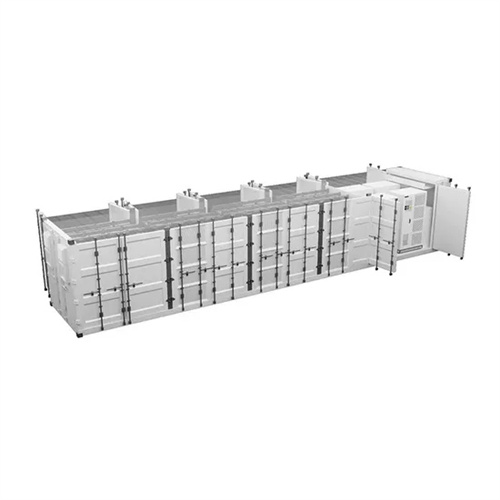
Is the power generation rate of space solar energy high
Space-based solar power (SBSP or SSP) is the concept of collecting in with solar power satellites (SPS) and distributing it to . Its advantages include a higher collection of energy due to the lack of and absorption by the , the possibility of very little night, and a better ability to orient to face the Sun. Space-based solar power systems convert Solar power plants in space, although difficult to build, would produce energy 13 times more efficiently compared to those on Earth, as their view of the sun is not obscured by atmospheric gases. [pdf]FAQS about Is the power generation rate of space solar energy high
What is space based solar power?
A step by step diagram on space based solar power. Space-based solar power (SBSP or SSP) is the concept of collecting solar power in outer space with solar power satellites (SPS) and distributing it to Earth.
What is the difference between space solar power and traditional solar power?
There are still several questions about the overall concept. The power ratio of space solar power to traditional solar power is 40:1. Traditional solar power does not provide power 24/7 and depends on weather conditions, whereas SBSP provides baseload power 24/7, independent of weather conditions.
What are the limitations of solar energy generation?
Solar energy generation has grown far cheaper and more efficient in recent years, but no matter how much technology advances, fundamental limitations will always remain: solar panels can only generate power during the daytime, clouds often get in the way and much of the sunlight is absorbed by the atmosphere during its journey to the ground.
When will space-based solar power be in orbit?
The initiative believes such a demonstrator could be in orbit by the mid-2030s. Space-based solar power doesn't suffer from the main drawback plaguing most main renewable energy generation technologies. In space, the sun always shines. No clouds ever block the sun's rays from reaching photovoltaic arrays.
Why is space solar energy important?
Solar energy obtained from space can provide safe, sustainable, environmental friendly, and economical electricity wherever on Earth. Humanity can transition away from fossil fuels with the aid of space solar power. This will significantly reduce our reliance on nonrenewable resources.
How do small spacecraft use energy?
Driven by weight and mostly size limitations, small spacecraft are using advanced power generation and storage technology such as >32% efficient solar cells and lithium-ion batteries.