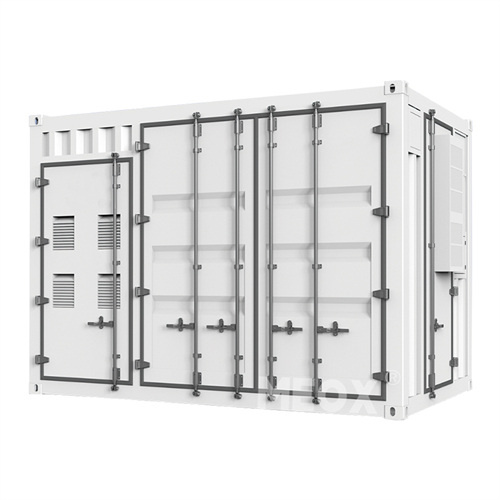
A photovoltaic system for residential, commercial, or industrial energy supply consists of the solar array and a number of components often summarized as the (BOS). This term is synonymous with "" q.v. BOS-components include power-conditioning equipment and structures for mounting, typically one or more DC to power converters, also known as
[pdf] 
The welder power requirement formula is: Voltage x amps / efficiency = watts / kilowatts To give an example: 24V x 150 amps / .85 efficiency = 4,235 watts or 4.3kwh rounded off. A welder needs 4235 watts to run for 1 hour. For 30 minutes you need about 2200 watts and so on. From here it is easy to figure out what. .
The most popular welding types are MIG, TIG and stick. But there is no single best welding for solar, because it depends on the job you have to do. MIG welding is the simplest to learn, and it uses affordable wires. The output quality is. .
A solar generator is more convenient to use for welding than a solar panel, as a single power station can generate up to 5000W. In contrast you. .
Earlier we pointed out that welders are not used continuously, so it won’t use up that much power. Welder size is measured in volts, amps and duty. .
Before you purchase a welder, check the spec sheet and make sure your solar power system meets the requirements. The most important are the minimum circuit size, the optimum.
[pdf] 
Select your timezone and enter your coordinates (latitude and longitude) to calculate the optimal orientation for fixed solar panels, twice adjusted solar panels, quarterly (seasonally) adjusted solar panels, and monthly adjusted solar panels. You can find your coordinates from Google Search. The calculator finds the best. .
There are two factors in the orientation. The first is the direction, and the second is the tilt angle. Both are independent but vital parts in optimizing orientation for solar panels. The direction is calculated using the azimuth angle of the. .
Fixed solar panels are a convenient and preferred choice. Solar panels are mounted permanently at a particular orientation. This orientation must be such that panels must continue considerable power throughout the. .
For seasonally adjusted solar panels, we reorient solar panels quarterly according to all four seasons: spring, summer, fall, and winter. Seasons and their months vary in different countries. But. .
Twice adjusted solar panels have to reorient twice a year, from March to August and from September to February. The direction might be the same or different for both half-years, but the tilt angle is always different..
[pdf]