
PV systems are most commonly in the grid-connected configuration because it is easier to design and typically less expensive compared to off-grid PV systems, which rely on batteries. Grid-connected PV systems allow homeowners to consume less power from the grid and supply unused or excess power back to the. .
Off-grid (stand-alone) PV systems use arrays of solar panels to charge banks of rechargeable batteries during the day for use at night when energy. .
Solar panels used in PV systems are assemblies of solar cells, typically composed of silicon and commonly mounted in a rigid flat frame. Solar panels are wired together in. .
A PV combiner box receives the output of several solar panel strings and consolidates this output into one main power feed that connects to an inverter. PV combiner boxes are normally installed close to solar panels and. .
When solar arrays are installed on a property, they must be mounted at an angle to best receive sunlight. Typical solar array mounts include roof, freestanding, and.
[pdf] A single battery may not be able to power your whole home, so you’ll need to prioritize what’s essential, such as lights, outlets, air conditioning, the sump pump, and so on. But if you want to run everything in your house, some systems allow you to stack or piggyback more than one unit to achieve the level of backup. .
Batteries and solar panels store energy as direct current or DC. Connecting DC-coupled systems to solar results in less power loss. The grid and your home run on alternating current, or AC power. AC systems are slightly less. .
Some appliances, such as central air conditioning or sump pumps, require more power to start up than once they are running. Make sure the system can accommodate your home’s specific appliance needs.
[pdf] 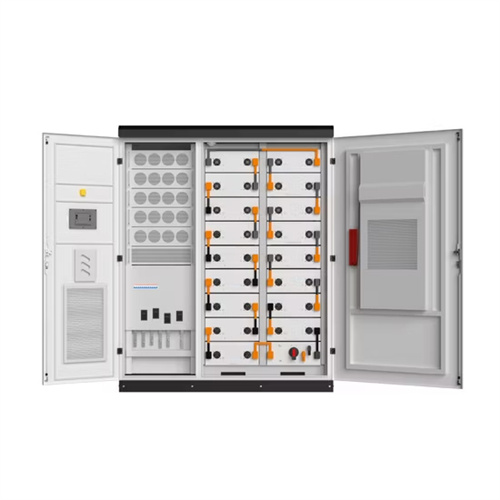
In the previous article, we outlined several ideas – inspired by historical systems– that could improve the efficiency of large-scale CAES plants. In this article, we focus on the small but growing number of engineers and researchers who think that the future is not in large-scale compressed air energy storage, but rather in small. .
However, decentralised CAES also faces important challenges. The first is the system efficiency, which is a problem in large- and small-scale. .
These examples seem to suggest that compressed air energy storage makes no sense as a small-scale energy storage system, even with a reduction in energy demand. However,. .
The second strategy to achieve higher efficiencies and lower storage volumes is exactly the opposite from the first. Instead of compressing air to a high pressure and taking advantage of the. .
Small-scale compressed air energy storage systems with high air pressures turn the inefficiency of compression and expansion into an advantage. While large-scale AA-CAES aims to recover the heat of compression with the.
[pdf] 